
... Or more precisely, Dark Engaged Art, where socio-political attitudes intersect with the role and place of the individual in the modern world. The titles of the works are picturesque, and chosen so that additional comment is rarely needed.
This work represents my self-portrait. It is not a figure that emerges from the mirror every morning, but a visual interpretation of my inner state, something like a journey through personal philosophy and emotional world.
Sometimes, when I am asked how I am, I like to answer the most: "Unfortunate as Gilgamesh and serene as Seneca"!
"Blissful Ignorance" is a work that visually explores the concept of bliss that comes from ignorance or unawareness of the reality that surrounds us.
The foreground is dominated by a figure with a facial expression that exudes serenity, but at the same time carries a certain amount of naivety and uncorruption. The figure's surroundings are filled with abstract shapes and rich, almost fantastical colors, which act as a metaphor for the complexity and chaos of the world around us, which this person seems to be oblivious to.
Is ignorance really bliss? Or is it just a way of escaping from a reality that is too harsh or complicated? Do such individuals become ideal citizens for structures in power? Does their unawareness and passivity allow unscrupulous powers to control them without resistance, while they enjoy their naive world of illusions?
This work is also an invitation to the viewer to think about how aware we are of the world around us and whether this awareness is always an advantage, or sometimes a curse.
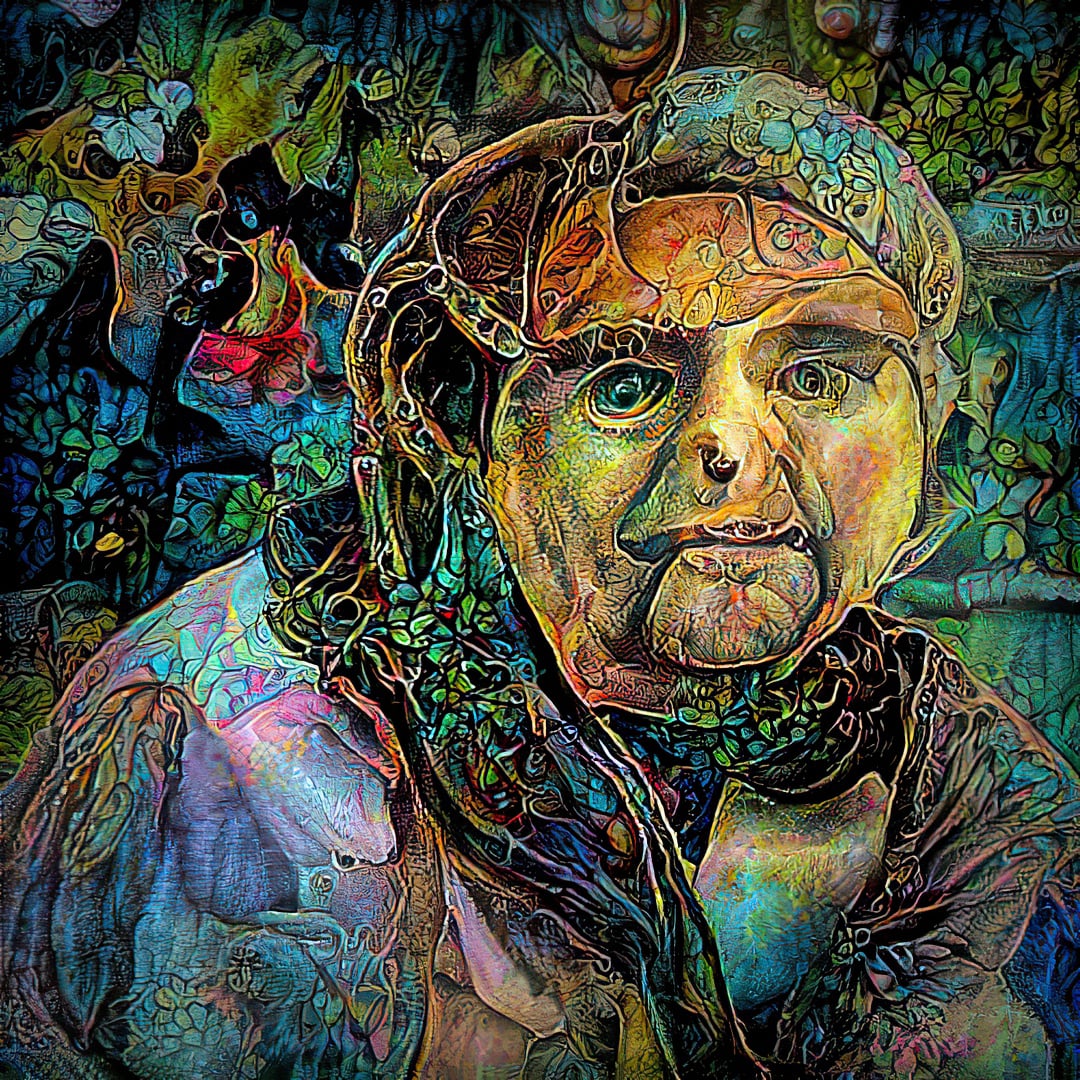
Through intense and abstract visualization, with the use of vibrant colors and fluid forms, this work tries to express the complexity and intertwining of human emotions, creating at the same time a sense of restlessness, tension and confusion.
It is also an invitation to face our own inner fears and prejudices, reminding us that fear and hatred are often inextricably linked and shape our reactions and worldview.
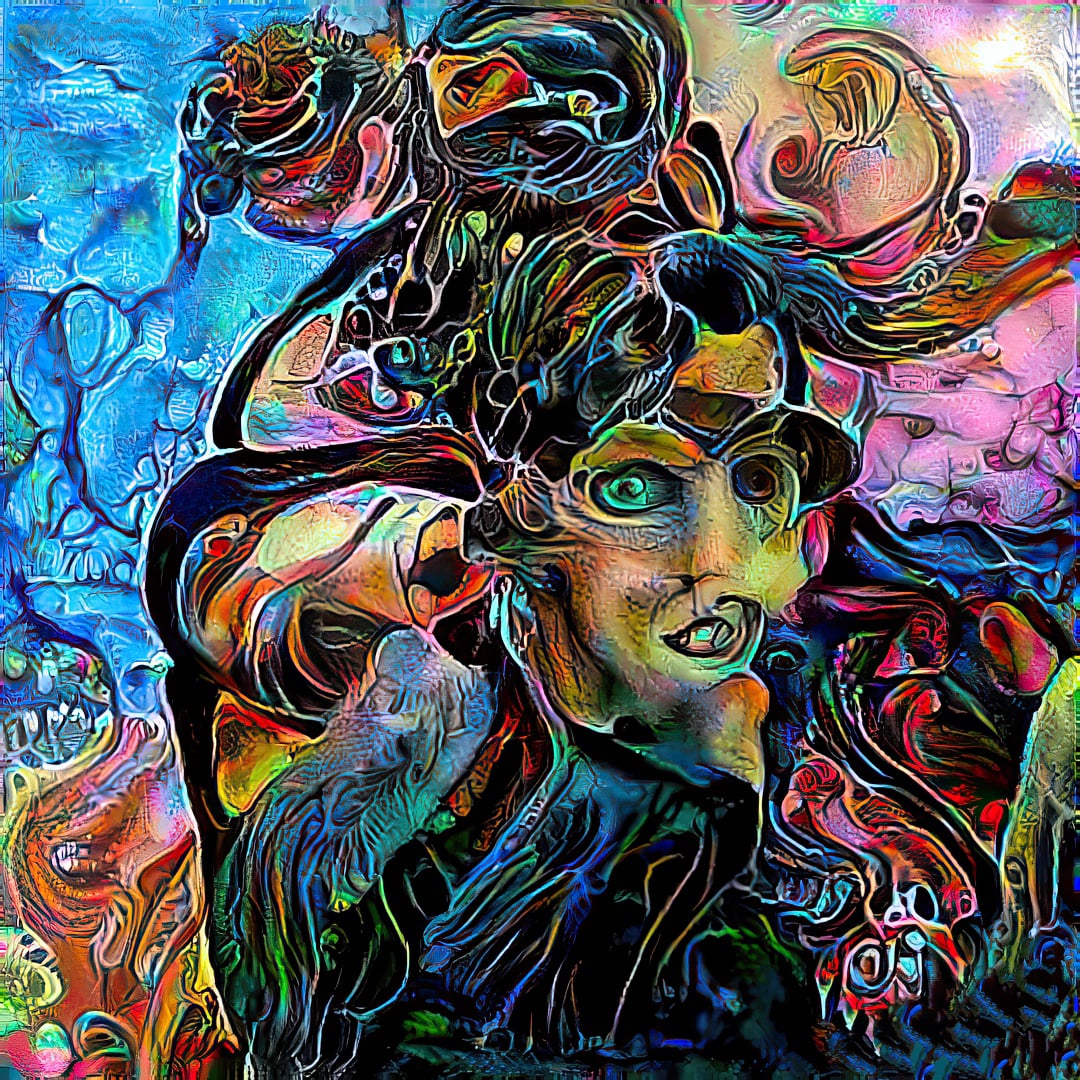
A married couple of newly rich people watch an opera performance for the first time. The lady is in shock and is watching what is happening on the stage with her mouth wide open, while her husband is slowly getting ready to take a nap.
Their comic awkwardness is the result of feeling lost and out of place in the cultural environment in which they first found themselves. They are aware that they are only passing observers who have come to be seen, not to truly enjoy the art.
In general, this work tries to make fun of modern nouveau richs by using caricature and satirical grotesque. What someone said: "A donkey with a saddle is still a donkey, it cannot be a horse".
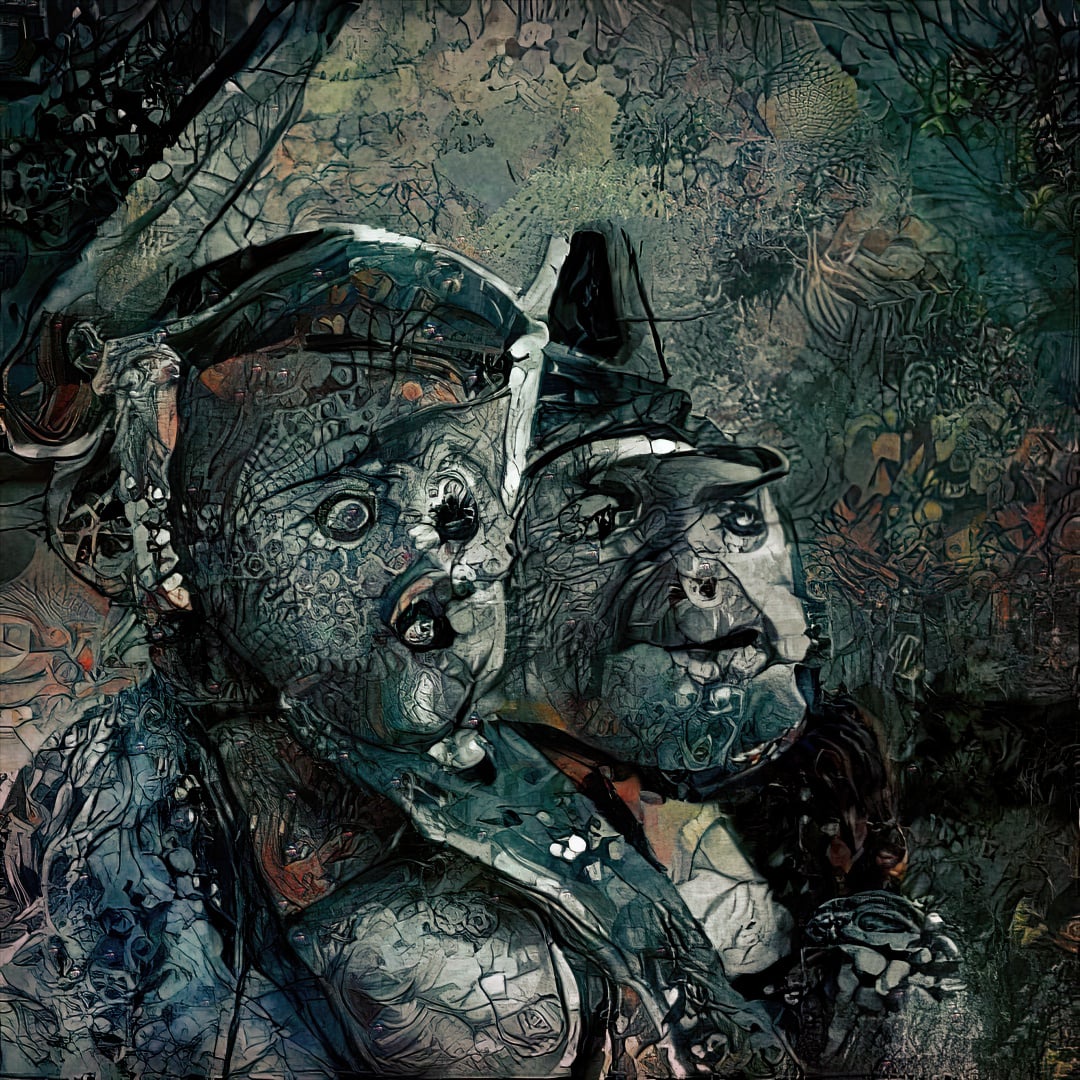
People who gossip, ugly, envious and spiteful people ...
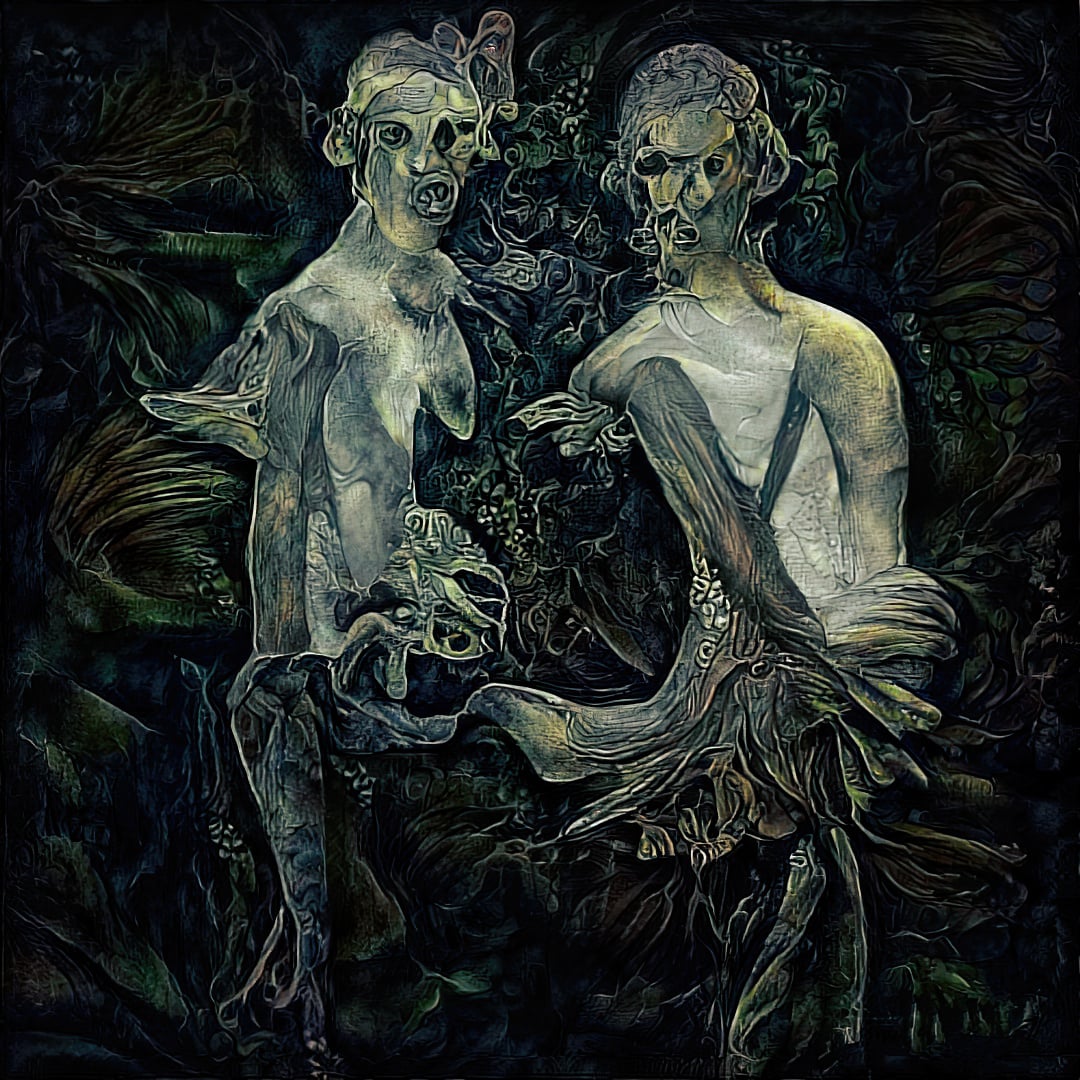
One day in the life of a friend of the night and a seller of love. A moment of despair in which neither her presence nor her function was needed by anyone, leaving her floating in the empty space between existence and non-existence.
Her figure is fragmented, suggesting a broken personality with a lost identity, and the dark and almost abstract background further enhances the feeling of isolation and separation, creating a contrast between her and the world around her.
The caricature procedure, with its abstract and grotesquely dehumanized elements, is not only an attempt to depict the physical state of a deeply injured female person. This work wants to explore the emotional and psychological aspects of all people from the social margins, people who did not know how to manage in crazy modern times.
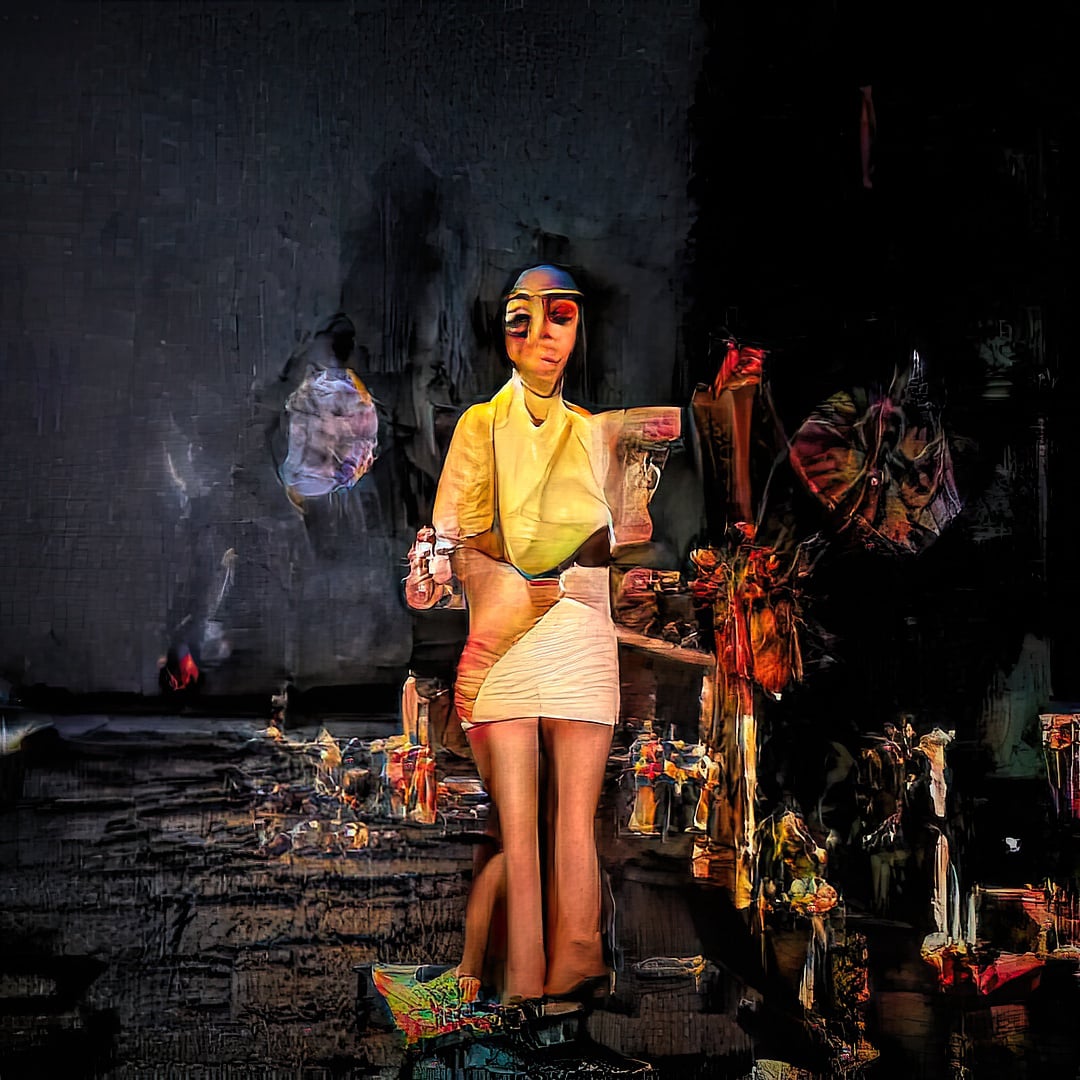
"Anima Mundi" is a work conceived as a manifestation of the universal spirit of the world, in which the union of nature and the human soul intertwine to form a unique organic whole.
There is an almost meditative atmosphere, which invites the observer to explore the deeper layers of consciousness, where individual existence merges with the universal.
The indifference emanating from the central female figure gives the picture a special emotional weight. Although her roots and body are fused with nature, her face reflects coldness and disinterest. This contrast between the organic connection with the environment and its indifferent view further reinforces the idea of the human inability to truly feel and appreciate the world that is both part of us and far from us.
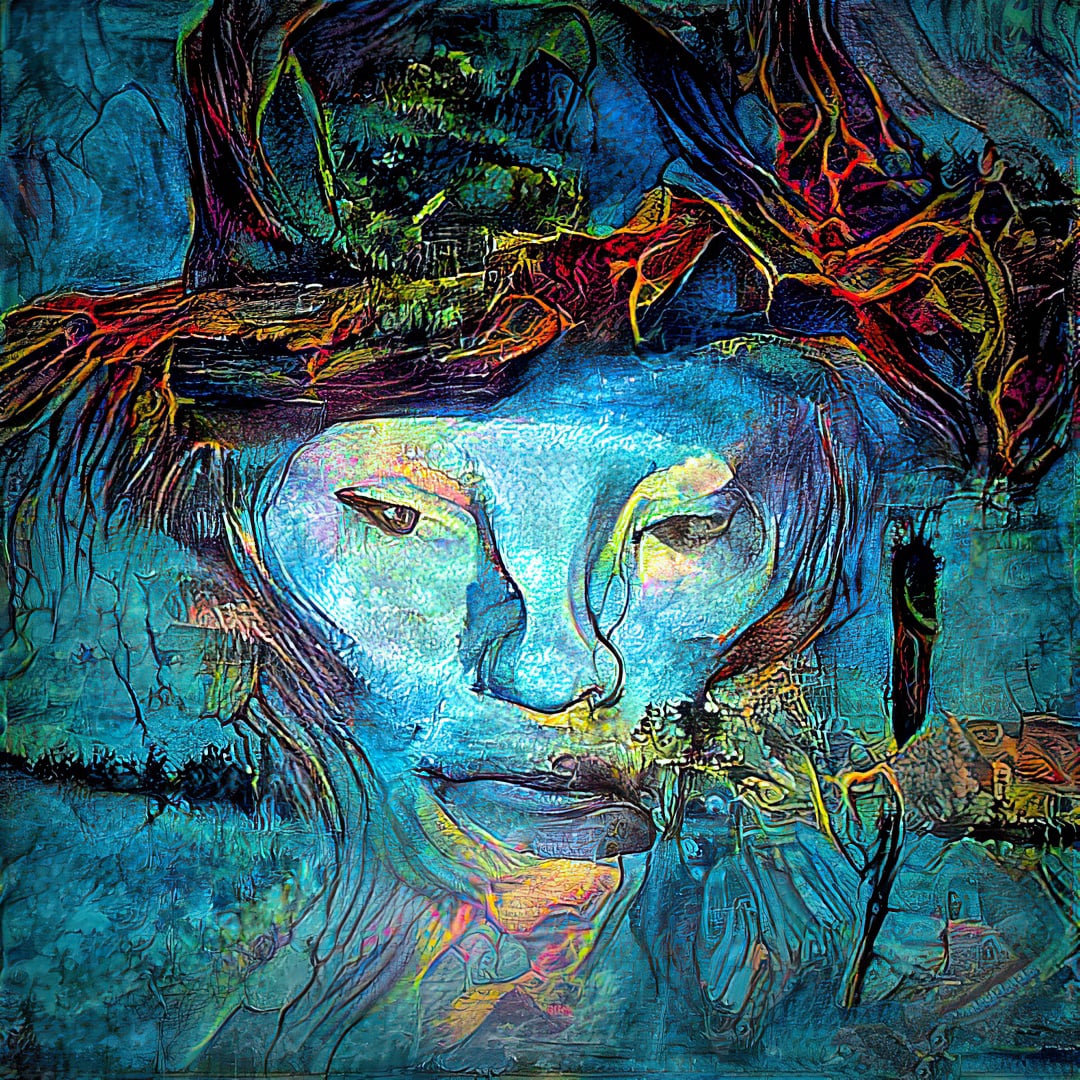
"The Triumph of Matter Over Spirit" attempts to portray the tension between materialism and spirituality.
The figure, constrained and bound, symbolizes humanity's enslavement to the material world, echoing the triumph of the "golden calf" over higher ideals. The dark, decaying cityscape beneath him reflects the degradation of both the environment and society, where unchecked materialism has led to severe consequences, like climate change and the loss of biodiversity.
The eerie, somber mood is reinforced by the intricate, chaotic visual layers, which deepen the sense of loss and spiritual decline. The atmospheric darkness envelops the viewer in a world where humanity's connection to the sacred is severed, leaving only the destructive byproducts of a materialistic civilization.
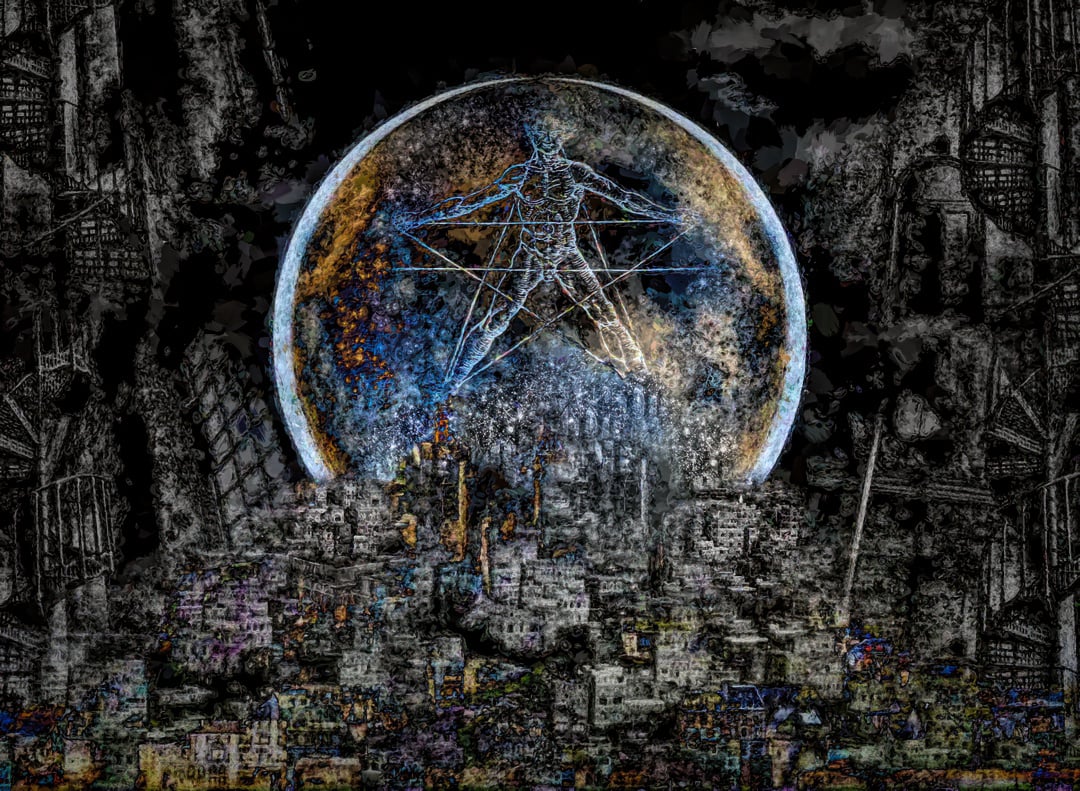
The title of the work "We Grow Accustomed to the Dark" is borrowed from the famous American poet Emily Dickinson, who wrote a poem of the same name. However, unlike Emily, my use of these words has an entirely different dimension, shifting the focus from a personally intimate struggle to a collective socio-political reality.
Through this work, I try to expose societies in which the generation is taught from a young age to obey, and not to think critically, where servitude is skillfully cultivated and transmitted from generation to generation. The young people who come are already used to "darkness", a metaphor for repression, conformity and lack of free thought.
Lack of freedom, whether personal or social, leaves traces, and this is best seen through the depiction of a faceless monolithic mass of people, which leaves the impression of static and lifelessness. The atmosphere in such societies is gloomy, and accordingly the composition of the work, the use of colors and light, is subordinated to that knowledge, trying to additionally emphasize the feeling of being trapped and the absence of hope.
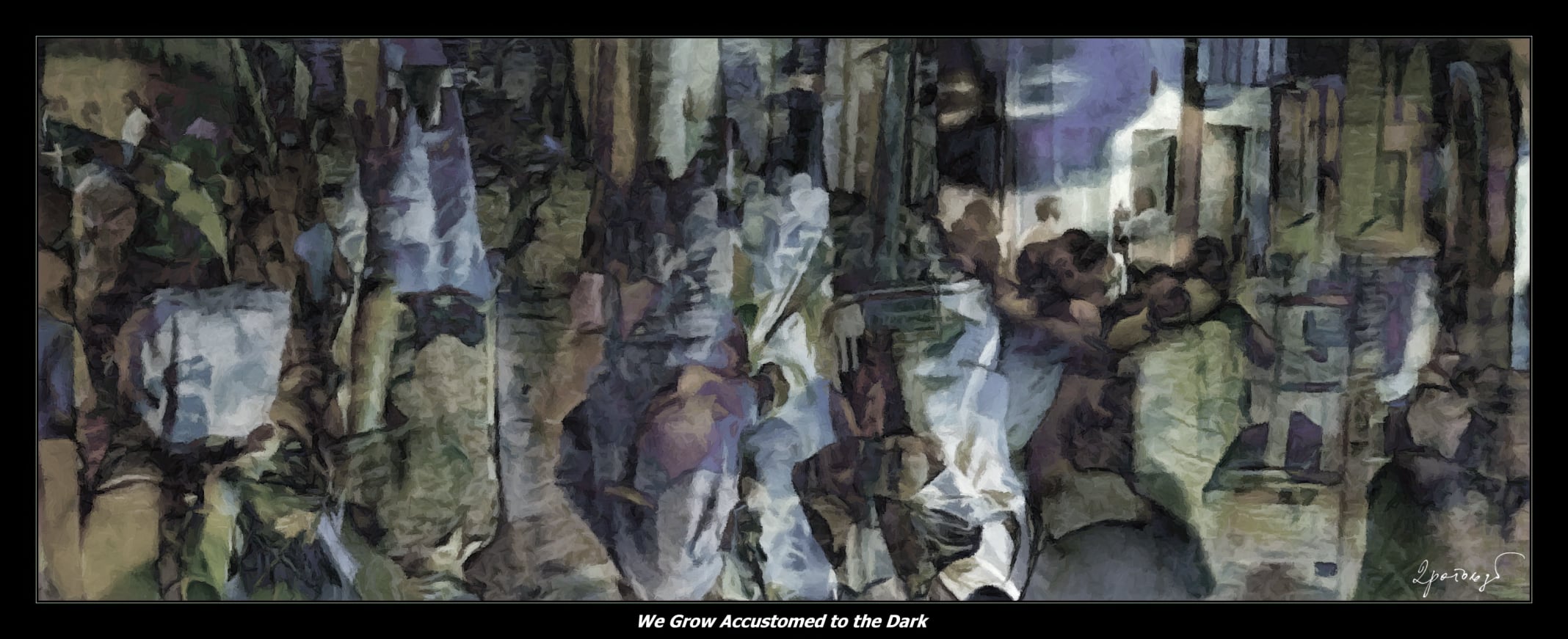
It does not happen in life that only individuals go astray. Very often, entire nations and societies are lost, which is what I wanted to point out through this work.
In the foreground is a dynamic but unclear and fragmented group, symbolizing societies that have lost their landmarks and are searching but failing to find their way to progress. Visually, it seems as if the movements within the mass are chaotic, aimless, perhaps driven by blind instinct or abandoned by currents that carry them into the unknown.
Perhaps these people are stuck in the past, or modern social problems, such as corruption, have led them to anomie, a state where rules and norms no longer exist and where the social structure has totally collapsed. This hopelessness and the impossibility of returning to betterment leaves the impression of general hopelessness, where there is no longer a coherent plan for the future.
On the other hand, although the atmosphere of the painting exudes confusion and hopelessness, there is also a sense of urgency, as if something is inevitably approaching.
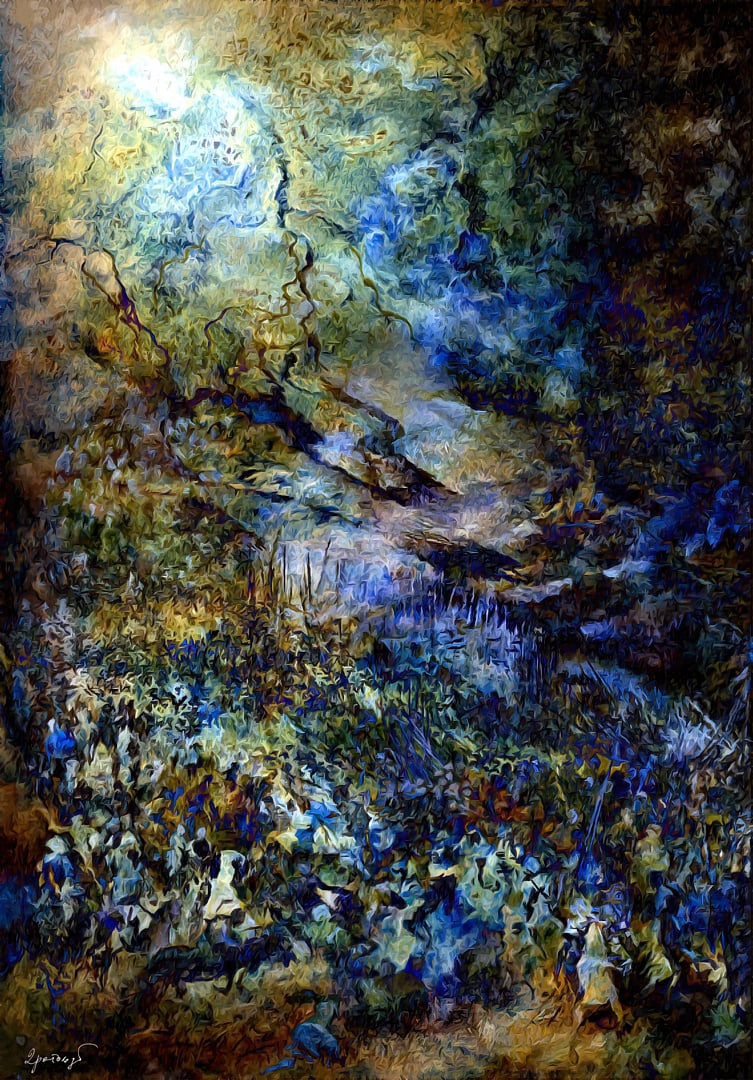
The work "Welcome To My Country" reflects a dark and gloomy vision of a society that has lost its meaning, plan and perspective. The title evokes an ironic welcome, emphasizing the contrast between expectations and reality in a country that does not have a clearly defined strategy and direction.
The visual composition of the industrial landscape with many crossed lines, reminiscent of railways and infrastructure, highlights the feeling of stagnation and neglect. The atmosphere is cold and alienating, which further adds to the feeling of instability and decay.
It is a society that lives from today to tomorrow, without a clear vision of the future, increasingly abandoned, not only because of the lack of a plan, but also because of the outflow of people, which is associated with gradual extinction and disappearance.
Also, it is a tired, atrophied society, a society that has lost the will and motivation for change and is stranded like a fish on dry land, unable to return to the dynamic waters of the 21st century.
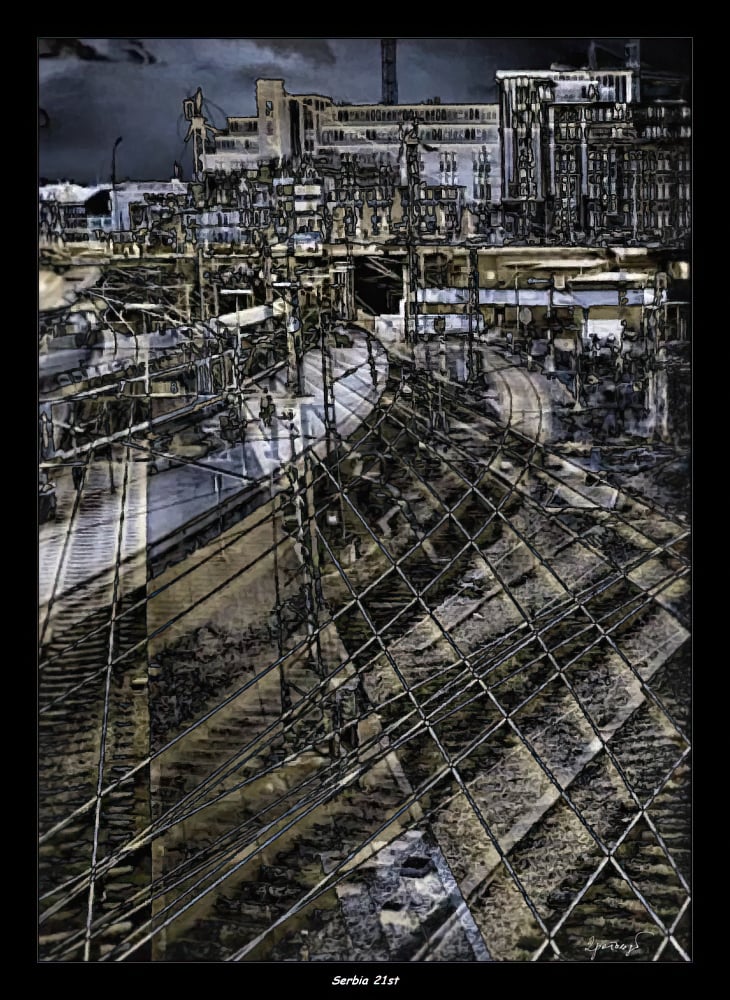
The work "Still Waiting for the Miracle" is a visual metaphor for the mentality of a society that is susceptible to conspiracy theories and that sees the cause of all events in the action of external forces, and not in personal responsibility, refusing to accept its own guilt for the stagnation of its community.
The people shown are therefore frozen in anticipation and turned towards the sky, passively awaiting a solution to their problems. Through this scene, social apathy is reflected, where failure is attributed to some "invisible hand" that prevents progress, while personal development and work on oneself are rejected as an option.
The use of black and white tones in this composition serves to further enhance the feeling of emptiness and hopelessness. Each character seems to be part of a mass that does not recognize individual responsibility, but relies on the myth of an unexpected force that will pull them out of chaos, not realizing that the only way to achieve this is through education combined with social proactivity.
Therefore, "Still Waiting for the Miracle" is an artistic expression that tries to explain the essence of this vicious circle of passivity and stagnation that follows many nations, especially in periods of social, political and economic crises.
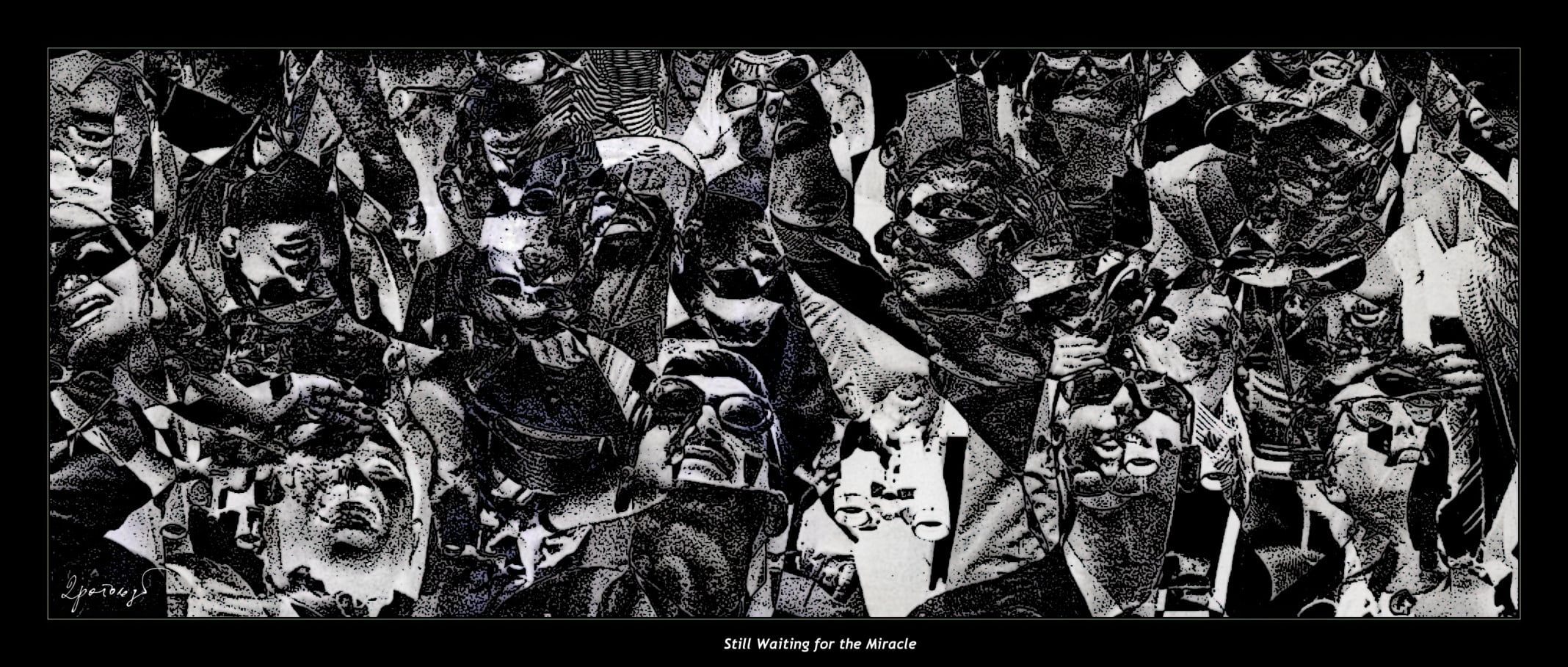
Left panel: "Spark of Rebellion"
Central panel: "Critical Mass"
Right panel: "Still On the Trone"
The triptych "You Must Believe in Spring" tries to bring optimism and reminds us that despite dark times, there is always a cycle of renewal and change.
Each scene in the triptych illuminates different aspects of the transformation.
The left panel is dominated by a luminous boulder that emerges from the darkness and symbolizes the growing discontent that culminates in the central panel, moving unmistakably towards its goal.
In the right panel, the ruler still stands confidently and upright on the throne, unaware of the inevitability of his fall.
The focus of the work is the transience of everything, even dictatorships themselves, with a reminder that every system, no matter how solid, has its end, after which comes a new spring.

AI Website Creator